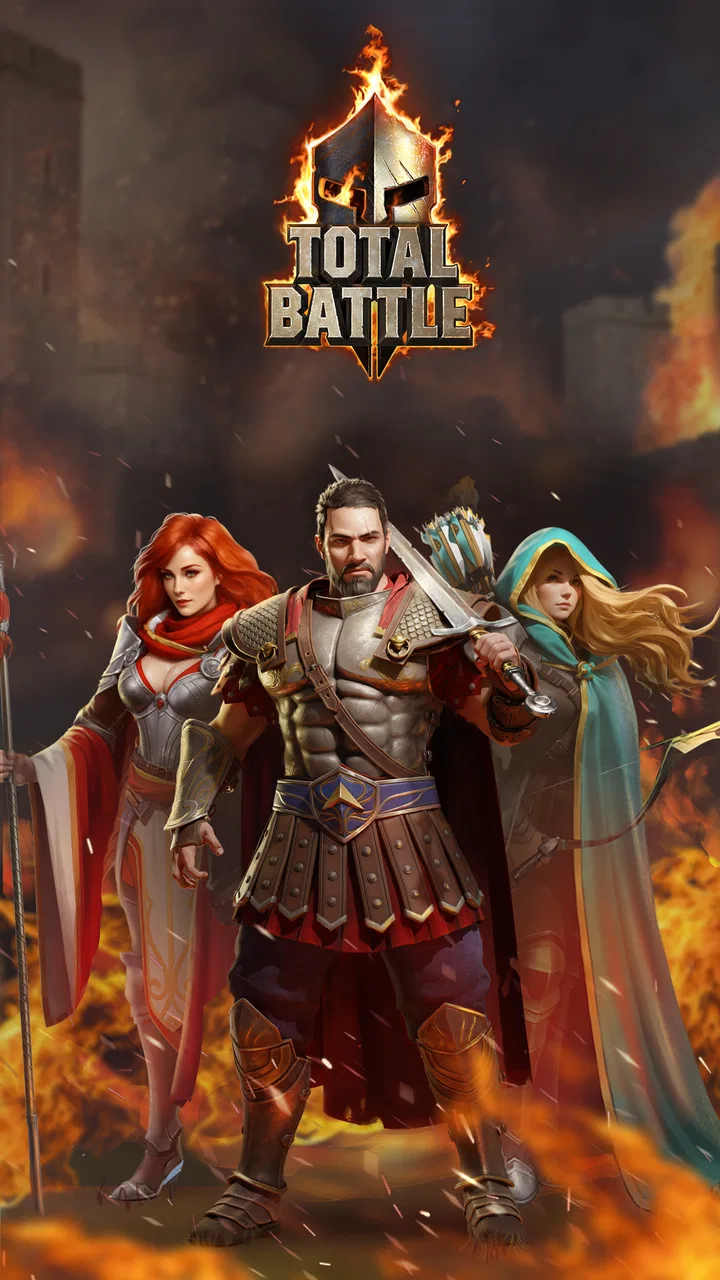
Total Battle: War Strategy
- 4.1
- Rating
- 50.00M
- Installs
- Free
- Price
 Analysis by App-foxy
I approached Total Battle: War Strategy expecting a fairly familiar mobile strategy game, but it quickly showed me that its appeal depends on patience as much as tactical thinking. Developed by Scorewarrior, this free strategy game puts me in charge of a growing kingdom, its army, and the heroes who lead battles. It is available for players aged Everyone 10+ and runs on devices using Android 5.0 or later.
What makes it interesting is the way it mixes several kinds of decisions. I am not only choosing which troops should fight. I also have to think about construction, research, resource use, hero development, and the timing of larger military moves. That combination gives the game more depth than a simple battle simulator, although it also means that people looking for instant action may find the opening hours slow.
The game is free to install, with optional in-app purchases ranging from $0.99 to $249.99 per item. That price range matters because the experience is designed around long-term progression, and players who spend can shorten some of the waiting involved. I could enjoy the basic loop without paying, but I had to accept that progress is more comfortable when I plan ahead rather than constantly trying to rush every upgrade.
You May Also Like

 AccuWeather: Weather Radar
AccuWeather Review: A Quick, Clear Forecast for Everyday Decisions
For everyday plans, the best forecast is the one you can understand quickly. AccuWeather makes rain timing, radar, and local conditions easy to act on, with a few trade-offs.

 Hill Climb Racing
Why Hill Climb Racing Still Turns Crashes Into One More Run
A tiny car, a bumpy hill and one more upgrade: Hill Climb Racing keeps resurfacing because its simple chaos makes every near-miss feel personal.

 AliExpress - Shopping App
AliExpress Makes Global Shopping Feel Personal, but Shoppers Bear the Risk
AliExpress turns a global marketplace into a pocket-sized discovery engine. Its reach is useful, its shopping loop compelling, and its trade-offs easy to miss.

 Lords Mobile: Kingdom Wars
Lords Mobile Is a Kingdom-Building Routine, Not a Quick Match
A case-by-case verdict on the building, battles, device demands, and social commitments that make Lords Mobile rewarding for some players and exhausting for others.

 PDF Scanner app - TapScanner
TapScanner Makes Paperwork Easier to Capture, Check, and Share
TapScanner makes scanning with a phone feel less like a rescue operation and more like a dependable step in getting work done. Its capture tools are useful, though not flawless.

 Block Blast!
 Shows How Much a Puzzle Game Can Leave Out
A quiet grid game shows why puzzle players increasingly value instant clarity, repeatable skill and low-pressure play—and where the genre still needs to catch up.
More From Our News Desk
View All News


How the kingdom-building loop feels in everyday play
I find the kingdom-building loop most satisfying when I give each visit one clear purpose instead of treating every available task as urgent. That small change helps me spend resources with intent and makes short check-ins feel connected to a larger plan. The next section looks at the settings and personal routines I’d review early, so the game’s steady pace works around my day rather than constantly interrupting it.
A campaign built around several small decisions
The first thing I noticed was that the game rarely asks me to make one enormous decision in isolation. Instead, progress comes from a chain of smaller choices. I improve buildings, prepare units, develop heroes, and then decide whether my current strength is enough for the next challenge. Each action feeds into another, so wasting resources early can create an awkward delay later.
This makes the game a good fit for short visits throughout the day. In a realistic routine, I might check it before work to begin an upgrade, return during a lunch break to collect progress, and come back in the evening to prepare another military action. It does not require me to sit in one uninterrupted session, but it rewards me for remembering what I started and what I want to accomplish next.
That structure also creates one of the game's main trade-offs. The more carefully I plan, the smoother the experience becomes. If I tap through menus without considering the next bottleneck, I can end up with a strong army but not enough of the supporting resources or development needed to use it effectively. The game is not difficult because every battle is mechanically complex; it is demanding because several forms of progress compete for attention.
Heroes add personality to the strategy
The heroes are more than decorative commanders. They give me a reason to think about how I approach different battles instead of sending the same force everywhere. A hero-focused approach can make a particular objective feel manageable, while another situation may expose weaknesses in my current setup. I found that choosing a leader before thinking about the battlefield often led to less satisfying results than deciding what I needed first and then matching the hero to that purpose.
A useful habit is to treat heroes as part of a wider plan rather than as individual upgrades to chase blindly. When I improved a character without considering the troops or objective that character would support, the benefit felt less noticeable. The better workflow was to decide whether I was preparing for a difficult encounter, strengthening routine progress, or building a more flexible force, then spend development resources with that goal in mind.
This is one of the less obvious strengths of the game. It gives progression a practical question behind it: what problem am I trying to solve? That question is more useful than simply asking which upgrade has the largest number attached to it.
Why the early game can feel slower than expected
The beginning does a reasonable job of introducing the basic rhythm, but I would not describe it as a fast route to constant battles. Construction and development take time, and the game expects me to live with that rhythm. Players coming from compact tactical games may wonder why they are spending so much attention on preparation before seeing the result of their decisions.
I eventually found that the waiting became less frustrating when I treated it as planning time. Instead of opening the game only to see whether a timer had finished, I used each visit to arrange the next sequence: collect what was ready, start the most important upgrade, review my military needs, and leave with a clear next objective. That approach makes the same pacing feel more purposeful.
People who want a battle every few minutes should probably look at a faster, match-based strategy game instead. Total Battle is better suited to someone who enjoys watching a kingdom develop over time and making choices that may pay off later rather than immediately.
Progression and the free-to-play question
Because the game is free, the real question is not whether it costs anything to begin. The question is whether I can enjoy its long-term rhythm without feeling pushed toward purchases. My experience was mixed in a way that is common for this type of strategy game: I could play without spending, but impatience made purchases tempting whenever several improvements competed for attention.
The optional purchase range is broad, extending from small items to packages priced as high as $249.99. I would advise new players not to spend during the opening phase simply because progress feels slow. The early game is the best time to learn which activities matter to you and whether you actually enjoy the planning loop. Spending before understanding that loop can make the game more expensive without making it more enjoyable.
For a free player, the most important skill is prioritization. I would focus on the upgrades that remove a genuine bottleneck instead of trying to improve everything evenly. A balanced-looking kingdom is not always an efficient one. Sometimes a narrow investment that supports the next meaningful objective is more valuable than several minor improvements scattered across the account.
How it compares with other mobile strategy choices
Compared with a quick competitive tactics game, this title feels broader and more persistent. A match-based alternative usually gives me a clear beginning and ending, while Total Battle asks me to maintain a continuing project. That makes it more suitable for players who like accumulation, preparation, and gradual growth, but less suitable for anyone who wants every session to stand alone.
It also differs from a purely city-building game because military decisions remain central to the experience. Building is not just decoration or a passive way to increase a score; it supports the army and the heroes I use in strategic conflicts. On the other hand, someone looking for a deeply granular war simulator may find the mobile-friendly structure more streamlined than expected.
My recommendation depends on what you want from the category. Choose this game if the idea of developing a kingdom, improving commanders, and preparing for larger conflicts sounds satisfying. Choose a shorter tactical game if you prefer immediate control and quick conclusions. Choose a more relaxed builder if combat planning is likely to feel like an obligation rather than the main attraction.
What changed the way I played
One practical lesson was to separate “available” from “useful.” Just because I had enough resources for an upgrade did not mean that upgrade was the right next move. I started checking what my next military objective required, then worked backward. This reduced the number of times I reached a battle with a developed-looking account that was not actually prepared for the task.
A second lesson involved timing. I stopped beginning long improvements immediately before I expected to play actively. Starting a lengthy development action before leaving the game made more sense, while shorter actions were better when I knew I would return soon. This simple habit made the waiting system feel less intrusive and helped me get more value from brief visits.
A third lesson was to avoid treating every battle as a test of raw strength. When an encounter went badly, I reviewed whether the issue was the army, the hero choice, or the timing of the attempt. Sometimes the better answer was not another general upgrade but a more suitable preparation path. That mindset makes losses informative instead of merely irritating.
The effect on returning players
Players who return after a break may need time to rebuild their understanding of priorities. A developed kingdom can contain many active goals, and it is easy to resume by collecting everything and spending resources immediately. I found it safer to take a short inventory first: identify the strongest current objective, check which improvements support it, and only then commit to a spending plan.
This matters especially for anyone who began casually and later wants to play more seriously. The game allows that change in attitude, but it does not remove the consequences of earlier choices. A returning player should not assume that the newest available option is automatically the best one. Re-establishing a clear routine is more useful than trying to catch up through scattered upgrades.
The large player base is also relevant here. The game has passed 50 million installs, and its average rating is 4.2 from around 318 thousand ratings, with about 8.9 thousand written reviews. Those figures suggest a well-established audience rather than a small experimental release, but they do not guarantee that its pacing will suit everyone. Popularity confirms that the format works for many people; it does not remove the need to decide whether long-term strategy is your preferred style.
Where the current experience still has friction
The biggest limitation is the amount of attention the game can demand without always producing an immediate payoff. I may make several sensible choices and still spend part of a session waiting for the results. That is acceptable when I am in the mood for a long project, but it can feel unrewarding on a busy day when I want a complete activity in ten minutes.
Another source of friction is the temptation to spread progress too widely. The game presents many directions for development, and new players can easily interpret that variety as a reason to improve everything at once. In practice, that can leave the kingdom broadly developed but weak at the one task that matters most. The interface may show plenty of options, but the player still has to create a hierarchy.
The purchase structure is another consideration. Optional spending does not automatically ruin the experience, yet the presence of expensive items changes how I view every delay. If you are uncomfortable with games that place convenience purchases alongside long-term progression, this may not be the right strategy title for you. I would also avoid installing it on a device where storage or performance is already a concern simply because persistent strategy games are easier to enjoy when the interface remains comfortable to use.
Who should play and who should skip it
I would recommend it to players who enjoy checking a developing kingdom, making plans several steps ahead, and improving a roster of heroes over time. It works particularly well for someone who likes having a continuing mobile game in the background of daily life rather than a title that must be completed in one sitting.
It is less convincing for players who dislike timers, resource management, or the pressure created by optional purchases. It is also not my first recommendation for someone whose favorite part of strategy games is direct battlefield control every second. The appeal here is the complete chain of preparation and decision-making, not just the moment when armies meet.
Families should also keep the Everyone 10+ rating in mind. The game is accessible to that age group, but parents may still want to discuss in-app purchases before allowing regular play, especially because individual items can cost up to $249.99. The safest approach is to treat spending controls as part of setting up the game, not as something to consider only after an accidental purchase.
What I would watch in the long term
The game was released on October 8, 2018, so its identity is not based on being a brand-new experiment. That age gives it a more established feel, but it also raises an important question for me: how well does the experience continue to serve both newcomers and long-term players? The most valuable future improvements would be the ones that make priorities easier to understand without removing the strategic choices that give the game its character.
I would also pay attention to how the balance between free progression and paid convenience develops. A healthy version of this model should let patient players make meaningful progress while giving spenders useful shortcuts rather than making non-paying play feel pointless. That balance is central to whether I would keep recommending the game after the initial novelty fades.
For new players, my advice is simple: give the game enough time to reveal its rhythm, but do not force yourself to like it. Play the opening stretch without spending, choose one clear development goal, and see whether planning around delayed progress feels satisfying. If it does, the layered kingdom-building loop can become surprisingly absorbing. If it does not, faster strategy alternatives will probably serve you better.
My recommendation after spending time with it
Total Battle: War Strategy is a substantial mobile strategy game with a clear preference for gradual progress. I enjoyed the way buildings, heroes, resources, and military decisions connect, and I found the best moments came from preparing intelligently rather than simply selecting the strongest-looking option. The game rewards a calm routine and punishes careless spending of time and resources.
It is not frictionless. Waiting, competing priorities, and the presence of costly optional purchases can make the experience uncomfortable for some players. Still, those weaknesses are easier to manage when I approach it as a long-term kingdom project instead of a quick battle app. The free entry point makes it reasonable to test, provided I keep spending under control and judge the game by its planning loop.
My final view is that this is a good choice for patient strategy fans who want their decisions to accumulate across many sessions. I would recommend it to a friend who enjoys building toward a goal, improving heroes with purpose, and returning to a living campaign over time. I would steer a friend elsewhere if they wanted instant matches, minimal waiting, or no temptation to pay for convenience. For the right player, its slow-burn structure is the main attraction rather than a flaw.
FAQs for Total Battle: War Strategy
01What is the main objective of Total Battle: War Strategy?
In Total Battle: War Strategy, the main objective is to build and expand your empire, manage resources, and lead your army to victory against other players. Players engage in strategic battles, forge alliances, and develop their cities to dominate the game's expansive world.
02Is Total Battle: War Strategy free to play?
Yes, Total Battle: War Strategy is free to download and play. However, it does offer in-app purchases that can enhance gameplay. These purchases are optional and include items that can speed up progress, provide additional resources, or unlock exclusive items.
03What platforms is Total Battle: War Strategy available on?
Total Battle: War Strategy is available on both Android and iOS devices. It's designed to run smoothly on a variety of smartphones and tablets, offering a consistent gaming experience across different platforms. Make sure your device meets the minimum system requirements for optimal performance.
04How important is forming alliances in Total Battle: War Strategy?
Forming alliances in Total Battle: War Strategy is crucial for success. Alliances provide strategic advantages, such as shared resources, coordinated attacks, and collective defense. Working with allies can significantly enhance your ability to conquer territories and fend off enemy attacks.
05What are the key strategies for success in Total Battle: War Strategy?
Success in Total Battle: War Strategy requires a balance of resource management, military prowess, and strategic alliances. Focus on building a strong economy, upgrading your troops, and scouting enemy territories. Joining an active alliance and participating in events can also provide significant benefits and rewards.
Pros
- Engaging real-time strategy gameplay.
- Wide range of units and upgrades.
- Frequent events keep the game fresh.
- Active community with alliance features.
- Visually appealing graphics and design.
Cons
- Requires significant time investment.
- In-app purchases can be costly.
- Occasional server lag issues.
- Complex interface for beginners.
- Limited offline gameplay options.

Total Battle: War Strategy
Gallery